Badgerfolk
Bu madde henüz yalnızca İngilizce.
The badgerfolk are a race that emerged deep within the Blue Forest, vastly different from other creatures. They take their name from their likeness to badgers standing on two legs.1
Origins
How the badgerfolk came to be is disputed. Some believed they were the result of a wizard's mistake; others thought they descended from intelligent badgers enhanced by a druid. By their own account, the badgerfolk have lived in the forests since the beginning of time.1
Appearance and nature
Badgerfolk are covered in fur, small in size, and often look cute, at least when they want to. Their resemblance to ordinary badgers is about as close as that between humans and monkeys: a badgerfolk stripped of its clothes and on all fours would be hard to tell from its less intelligent cousins, which lets them hide in darkness or at a distance. They average about three feet tall.2
For all their size, badgerfolk have courage and resilience to rival dwarves, and for some unknown reason they are less affected by fear than others. They are neither carefree nor quick-tempered, but they rarely give in to fear once a fight cannot be avoided. They are fiercely aggressive in defending their territory and never shy away from enemies much larger than themselves.1
They are good-hearted but fierce, orderly and traditional, and they value the support of the community over the individual. They have no tolerance for oppression or tyranny.3
Badgerfolk usually live in large clans, yet they are not afraid of being alone and have a strongly adventurous spirit. Despite their short stature, some work as mercenaries in human cities far from home, and they gradually calm down once they arrive in a city.1
Their creed is summed up in a saying: "Peace through hard work, strength through unity!"1
Towns
Badgerfolk live in towns they build inside forests and along their edges, and every building in these towns is made of wood. They are highly skilled at taking their towns apart and moving them, when the need arises or to make use of the seasons, so that the same town may be found in different parts of a forest at different times of the year. Because of this, some Imperial historians who did not research the matter thoroughly have greatly overestimated their numbers.1
Badgerfolk take care not to harm the forest: they avoid cutting down new trees and reuse the same materials until they can no longer be used. When they must fell new trees, they replenish the forest by burying pine cones and seedlings along their migration routes. At certain times of the year they set up temporary settlements along forest edges and roadsides to trade with The Empire.1
Crafts and trade
Badgerfolk are skilled and diligent craftsmen, known for their archery, their lightweight weapons and the remarkable speed with which they set up towns. Woodworking, blacksmithing, weaving, tanning, hunting and botany are their main livelihoods. They gather resources from the forest with care, craft them with skill and sell them to humans in exchange for other goods rather than money.2
Money is little used among badgerfolk themselves, but their traders know and carry currencies from every corner of the land in order to trade with other civilisations.3
Government
Badgerfolk towns are not ruled by nobles or kings, and it would be wrong to say that badgerfolk understand the idea of nobility at all. There are esteemed families, but they have no right to rule. Instead each town elects a mayor, and any capable adult skilled in a craft can vote and stand for election. The mayor appoints people to the town's important posts, provided they are willing to take them on.3
When a mayor dies or loses the community's trust, a new election is held. Leadership does not pass from father to son, and a change of leader brings no shame. In peacetime a leader may be someone who knows trade, but in a crisis or a war it is natural for a warrior to take over.3
Neighbours and war
Badgerfolk share much of the forest with the wood elves. Their lives differ, but their shared respect for the forest and the benefits each can offer the other often lead to alliances. Because badgerfolk understand trade better than the elves, in many places they handle the trading of wood elf goods: elven products reach the human world through badgerfolk hands, and human materials reach the elves the same way. Drooms, too, often make their homes in badgerfolk towns within the forest.4
When The Empire and the elves come into conflict, the badgerfolk usually side with the elves, and their help goes well beyond supplies. These conflicts are mostly over territory and would end in harm to the forest, so fighting beside the elves is the only choice they see.3
United in battle, badgerfolk become exceptional warriors, carrying out tactics with great discipline and overcoming the drawback of their short arms through organisation and unconventional methods. Their archery and trap-setting are notable, as is their specialised cavalry mounted on giant badgers. These badger riders are seen outside the forests too, and badgerfolk adventurers prefer giant badgers to ordinary mounts.2
Arcane spellcasters are scarce among badgerfolk, and they have little experience of facing magic users.5
Orc tribes fight badgerfolk, along with the Empire, the northerners, capra hordes and wood elves.6
Language and names
Badgerfolk have their own language, Badgertongue, and name their children in it. Names vary from place to place, but their meanings usually carry a natural theme; family names include Oakling, Woodburrow, Riverrow, Sunseed and Honeymouth. A badgerfolk comes of age at three and generally lives up to about two hundred years.3
Subraces
Three subraces of badgerfolk are found in the Lands of Exile: the Honey Badgerfolk, the Striped Badgerfolk and the Hog Badgerfolk.7
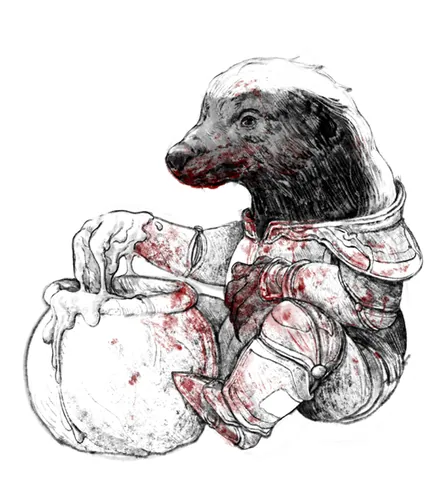
- Honey badgerfolk cannot feel fear. A large white mark runs from the top of the head down the back to the legs, and most badgerfolk communities regard it as a symbol of toughness; their fur is also thicker than that of the others. Their endurance and bravery fit them for the military class of the walking towns.7
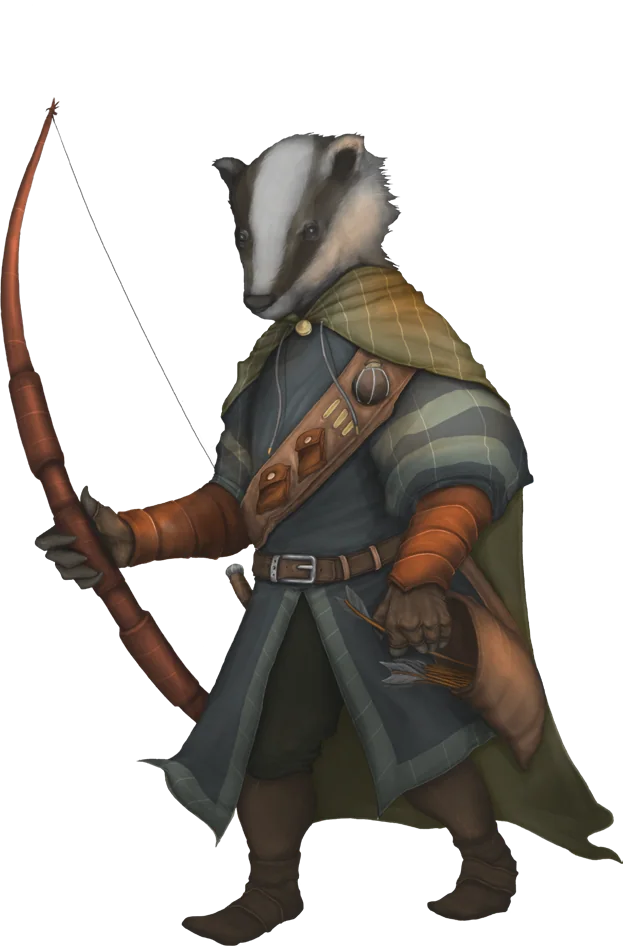
- Striped badgerfolk are what people first think of when they think of badgerfolk civilisation. Their twin stripes start at the nose, run across the face and cover the whole back, and their communities read the stripes as marks of great deeds to come.7
- Hog badgerfolk can live without drinking water, which suits them to long journeys. Their bodies are slender compared to the other subraces, and their stripes end before they reach the back.7
The warrior Ferka Doru’festan comes from the Barb-ba Kus, a tribe of honey badgers, which he left in search of adventure in the Empire, and fights with a traditional technique honed by that tribe.5
Notlar
Kaynaklar
Bu madde şunlara dayanır:
Bu maddedeki görseller
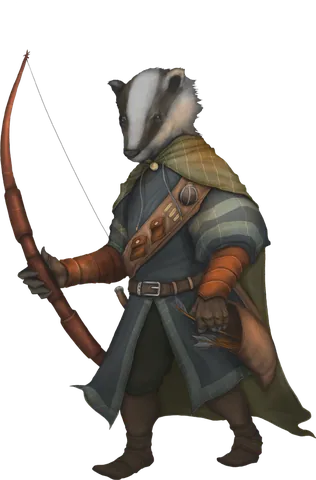 Shadow Over Vansreik (Bad Badger Games, 2024), p. 44. Art by the Bad Badger Games team.
İlgili maddeler
 KarakterFerka Doru’festanA honey badgerfolk fighter of the Barb-ba Kus tribe who left his homeland for adventure in the Empire and became a hero of Nearlake after helping to defeat a hill giant.ÖrgütBarb-ba KusA honey badger tribe of the badgerfolk, homeland of the adventurer Ferka Doru'festan and keeper of the traditional fighting technique called Mapka.
 BölgeThe EmpireThe human realm at the heart of the Lands of Exile, an absolute monarchy heavily shaped by faith, ruled from Marble City by the unbroken line of the Red Eagle and divided into five provinces under their Sovereigns.HalkElvesLong-lived elven peoples who were wholly immortal before the Desolation and the Exodus and now live about a thousand years; only elves dwell in the Da'fat Federation south of the Calinor-dal.HalkHumansThe people who lived in northern Caligran long before the Desolation, sheltered the long-lived races after the Exodus and remain the greatest power in the Lands of Exile, at the heart of which stands their Empire.
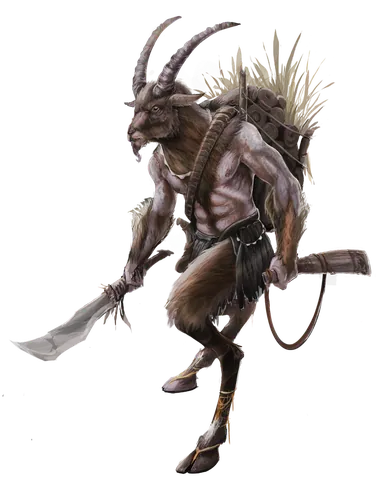 HalkCapraA tireless, goat-headed nomadic people of the Yellow Sea beyond the forest frontier, led in herds by their strongest warrior, the Shepherd, and divided between herds bound to nature and herds touched by dark gods.
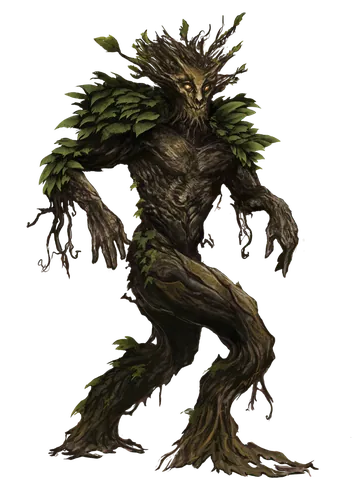 HalkDroomA rare people born from the heart of an ancient forest, whose bodies of bark, leaves, vines and resin make them resemble walking, talking trees. They have no parents, do not age, and turn back into trees when they die of natural causes.
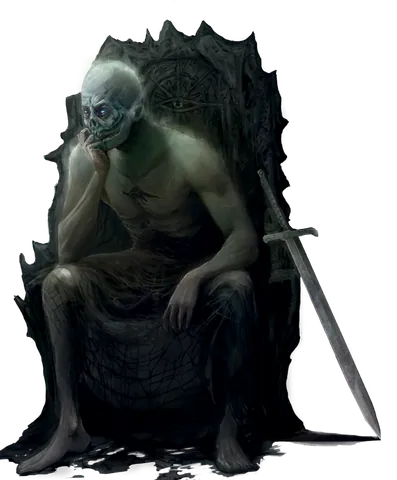 HalkForgottenThe dead who walk with their souls and their memories intact. Unlike the mindless dead, a forgotten remembers everything, looks as they did in life but paler and cold, does not age, and must hold to a purpose or slowly lose their mind again.
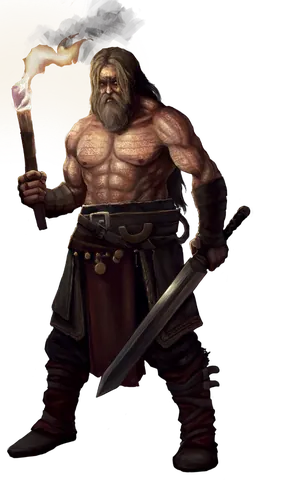 HalkVenerethPeople born to any race with enigmatic writings on their bodies, a legacy of sages who sought to save the knowledge of the world before the Desolation. Each is born with a gift for one field of learning, and many are feared or hunted for their marks.