
High Church
Bu madde henüz yalnızca İngilizce.
The High Church is the absolute religious power that stands above the temples of The Empire and binds them together. It is one of the most important and powerful institutions in the Empire, and its influence on the people, its wealth and its political power are unmatched by any other. Many scholars count it among the pillars that keep the Empire standing.1
Sanctuary
A few miles southwest of Marble City lies Sanctuary, a city filled with temples, where the High Church has its central First Cathedral. Every god the Empire does not consider heretical has a large temple there. The city grew from the traders and innkeepers who gathered around the temples, and it is the most pilgrim-rich place in the world. It has orphanages, schools that train knights, schools that teach reading and writing, and schools that train priests.2
Hierarchy
A temple may be raised in the name of a single god. Such temples have autonomy in their internal matters, but they remain accountable to the High Church, and their high priests carry out their duties with its approval. A temple of a single god is led by an Archpriest; senior priests who have devoted their lives to the god's path are high priests, those below them priests, and those at the beginning of the priesthood acolytes.3
In the major churches built for the worship of the whole pantheon, experienced priests are called bishops rather than high priests. The most senior priest at the head of such a church is the Archbishop, a rank above the high priests and archpriests of the temples, and the leaders of these churches are more influential than their counterparts.2
In Sanctuary there is a priest of the highest rank for the faith of each god of the Exiled Pantheon; these leaders of faith are called Patriarchs, except that the head of the Cult of Zeolet is always a woman and is titled Matriarch. The leaders of the cults of Apathe and Korhak also have a place among the patriarchs, though their only temples stand in Sanctuary with chained doors and empty halls.2
Above the council of patriarchs is the Supreme Patriarch, elected from among them, who is the religious leader of both the High Church and the whole Empire. Many hold the Supreme Patriarch to be the most powerful person in all the Lands of Exile, second only to the Emperor.2
The church's internal texts consider "temple" the proper word for a building dedicated to a single god and "church" for one dedicated to the entire Exiled Pantheon. In practice the distinction is not observed even by priests, let alone by ordinary people.3
Doctrine and reach
The most holy book of the High Church is the Codex Deus, said to contain the divine word of Alarath.4
Temples outside the Empire may differ in traditions and rituals, but the influence of the High Church reaches far. Even so, the farther one travels from the centre, the more the religious narrative diverges from that of the High Church.5
The church does not accept every belief of the realm. Despite its rejection, dwarves believe that it is Volkan who shapes them from stone and places their lost souls in anvils. The druids of the Circle of the Old World are not officially recognised by the High Church, yet they are highly respected among the people, especially in the countryside.6
Bringing back a soul that has already passed the threshold of The Gate requires, among other difficulties, the approval of the High Church.3
Power in the Empire
Besides its religious power, the High Church plays a role in Imperial politics and even in diplomatic relations with other cultures. Its priests influence judges, generals and nobles, and they take part in shaping laws and customs.2
It also has a voice in the imperial succession. Should an Emperor die without an heir, the Sovereigns gather to choose a new one, and to prevent a tie among their four equal votes one vote was given to the High Church; if the line of the Red Eagle ever breaks, the Supreme Patriarch casts that vote.7
In history
The High Church and the Imperial nobility, tired of the madness of the War of the Immortal Mages, supported the repentant wizards and so brought that long and bloody war to an end.8
On Victory Day the Chain Wardens of the Order of Chain, supported by Archon and the High Church, defeated the darkness through a ritual.9
The silence of the gods that followed, The Time of Silence, shook the hierarchy of the High Church and filled the realm with fear before it ended within five years.10
During The Skolpa Scourge, Skolpa's ruthless destruction of temples was unacceptable to the Empire, and the High Church demanded retribution.11
Church doctrine held that the Eye of Aquaron marked the edge of the known sea, a barrier placed by the gods to protect humanity, and that piercing it would be disastrous. When Castor Onerio set out to sail west in 285 AVD, he did so under the High Church's protest; once the Emperor granted his support, the church could only ask that a paladin sail aboard the ship.12
Other institutions
Contrary to popular belief, the Holy Inquisition is not part of the High Church. In its early years the clergy criticised it for the shadow it might cast over their authority, and a deliberate distance remains, because its harsh methods do not fit the church's image.13
In the Free Ports the Church of Aquaron is autonomous, and its views conflict with those of the other priests of Aquaron within the High Church; the Free Folk keep their church of Aquaron in Neptune independent of it.14
Notlar
- ↑KitapLands of Exile: Starter Setting Guide, pp. 24, 40
- ↑KitapLands of Exile: Starter Setting Guide, p. 24
- ↑KitapLands of Exile: Starter Setting Guide, p. 23
- ↑KitapLands of Exile: Starter Setting Guide, p. 49
- ↑KitapLands of Exile: Starter Setting Guide, pp. 21, 23
- ↑KitapLands of Exile: Starter Setting Guide, pp. 30, 39
- ↑KitapLands of Exile: Starter Setting Guide, pp. 11, 33
- ↑KitapLands of Exile: Starter Setting Guide, p. 12
- ↑KitapLands of Exile: Starter Setting Guide, p. 13
- ↑KitapLands of Exile: Starter Setting Guide, p. 14
- ↑KitapLands of Exile: Starter Setting Guide, p. 16
- ↑KitapLands of Exile: Starter Setting Guide, p. 17
- ↑KitapLands of Exile: Starter Setting Guide, p. 40
- ↑KitapLands of Exile: Starter Setting Guide, pp. 29, 44
Kaynaklar
Bu madde şunlara dayanır:
- SSGLands of Exile: Starter Setting Guide(Bad Badger Games, 2024), pp. 11-14, 16-17, 21, 23-24, 29-30, 33, 39-40, 44, 49
İlgili maddeler
 BölgeThe EmpireThe human realm at the heart of the Lands of Exile, an absolute monarchy heavily shaped by faith, ruled from Marble City by the unbroken line of the Red Eagle and divided into five provinces under their Sovereigns.
 TanrıAquaronThe god of sea and rivers, the Lord of Sea, First Shipmaker and Blue God, patron of sailors, who sheltered the fleeing elves and taught them seafaring.ÖrgütHoly InquisitionA fanatical order of witch hunters that hunts illegal sorcerers, cultists and cursed creatures across the Empire, judging them by the verdicts of the Magnus Malus.BölgeEye of AquaronThe endless, boiling vortex in the Great Western Sea that separates the continents of Caligran and Canarque, long held by religious doctrine to be a barrier the gods placed at the edge of the known sea.ÖrgütChurch of AquaronThe church of the sea god Aquaron in the Free Ports, an autonomous body independent of the High Church whose church in Neptune stands only ten steps from the sea.ÖrgütOrder of PalanthorA prestigious secular order of knights, older than the Empire itself, founded after the Exodus to oversee the refugees and guarantee the agreements made with them, and known for its holy standard and its tablets.ÖrgütSir Vernon's partyThree armoured church members of the Yeni Dünya campaign, a knight named Sir Vernon and his two apprentices bearing Earth Temple symbols, who claim the ancient inscription carried by the band as the church's sacred inheritance.ÖrgütWitch hunters of Sınır SapıThe band of witch hunters working in the quarantined Sınır Sapı district in the Zincirsiz campaign under Master Otto, one of the three parties investigating the sickness there alongside the Empire and the elves.
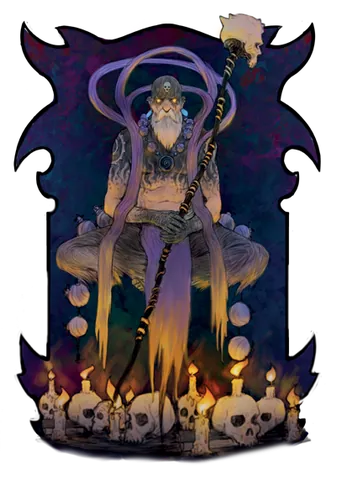 ÖrgütAshkeepersA monastic order that recruits only from the lowest of society and keeps ancient, rarely taught techniques for drawing on the ki that lingers in the dead.
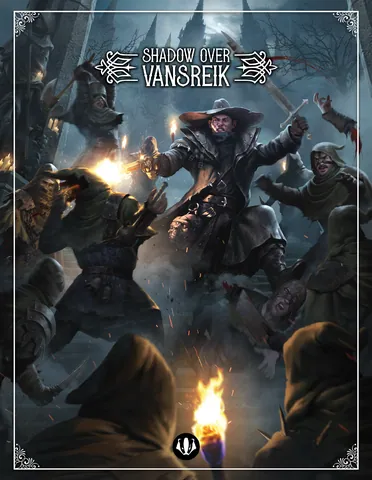 ÖrgütChurch of ShamyazaThe church of the archangel Shamyaza, the Saint of Blades, whose most powerful seat is in Vansreik; its red-robed, sword-bearing clerics hold sway over city politics and over the healing given to citizens.