
Otto
Otto is the priest of Alarath in North Razer in the campaign Mürekkep ve Çelik ("Ink and Steel"), head of the brothers who serve the town's new temple.12
The temple and its priest
The temple is a hard-edged, angular building with one great door and a large hall of prayer; its benches were made without charge by Felix, the father of the mage Castor, and Otto is grateful for it. Otto is in his late forties, round-bearded and upright, once fit and now a little stout, with a strong voice. A war priest of strict rules, he carries a blunt mace for duty and ceremony, as is the custom of Alarath, and wears metal bracers and heavy war boots even out of armour. His small room holds a hundred or so books, ritual incense and candles, phials of holy water and a great codex. In the war beneath the earth, The Underdark Campaign, he served behind the lines, tending the wounded.1345
The local worship of Lunos, the moon guardian of the town, is not counted as heresy by the temple.1
The medicine
Castor's family say that Otto refused medicine to the wife of a northern butcher in the town, who worships the Great Wolf, and told her to go to her own shaman; it was put as a rule of the faith that priests of Alarath cannot heal unbelievers. Castor's mother Claudia, sick with the same cough, would not take her own medicine for that reason. When Castor later visited the temple and was reminded that a gift is customary, he hinted that he had spent the last of his money on medicine for patients who could not be treated, and gave nothing; a brother smiled and said that gifts are not required.6789
Leonard's confession
Leonard came to confess. Confession, Otto explained, means telling a priest without a screen and learning Alarath's path to forgiveness; it is kept secret unless it conflicts with the teaching of secrecy, and he could punish such a sin as killing an officer of the Empire. When Leonard told of the war beneath the earth and asked whether it was a sin to believe that nobles are not always good, Otto said that a soldier rightly brings sins of anger and violence to a priest of Alarath, the god of war, and told him the founding myth of the Empire: the high priests chosen by the gods all dreamed on the same night that the Red Eagle alone was crowned. Only the Red Eagle line, in his view, is blessed to be obeyed without question; other nobles can err, and obedience to that line keeps the Empire whole and lets good prevail.4101112
Asked whether citizens may act when the law is wrong, he gave the example of the civil war against the usurper, when the commander of the northern armies and others brought down one of the imperial line and raised another, and held the law of the gods above written law. Asked whether trading and shaking hands with elves is a sin, he said that elves are subjects of the Empire and loyal allies who helped in the war, though humans come first in a human empire. Leonard left a gift in the brothers' box.131415
The books
Otto let Castor look through the temple's books, praising the search for knowledge. Glanfall, whom Castor introduced as his apprentice, found a book in Celestial, which Castor read by magic: it records the holy symbols given in visions or dreams to the high priests of the region when they took their orders or ranks. The other books dealt with gifts, the lives of priests and the history of the temple. Otto also spoke of a thesis made of ten years of letters between two priests debating whether the elven river Kalinor Dal lies under Aquaron or Lunos, but was reluctant to part with it.16171819
He gave Castor a book of which the temple held many copies, copying being important in the brothers' training. In return Castor left him a book by Master Yunus, Büyüyü Sizden ve Sizi Büyüden Korumak İçin ("To Protect Magic from You and You from Magic"), which argues that mages acting on their own initiative can bring disaster and that they should be kept under control and raised with missionaries. Otto said that he knew of Yunus.2021
Notes
- ↑At the tableAkşelale'ye Varış | DnD 5e Oynanış #5 (Mürekkep ve Çelik #5), 16:46
- ↑At the tableAkşelale'ye Varış | DnD 5e Oynanış #5 (Mürekkep ve Çelik #5), 17:41
- ↑At the tableAkşelale'ye Varış | DnD 5e Oynanış #5 (Mürekkep ve Çelik #5), 18:24
- ↑At the tableAkşelale'ye Varış | DnD 5e Oynanış #5 (Mürekkep ve Çelik #5), 19:49
- ↑At the tableAkşelale'ye Varış | DnD 5e Oynanış #5 (Mürekkep ve Çelik #5), 31:28
- ↑At the tableSakin Bir Gün | DnD 5e Oynanış #4 (Mürekkep ve Çelik #4), 1:42:41
- ↑At the tableSakin Bir Gün | DnD 5e Oynanış #4 (Mürekkep ve Çelik #4), 1:51:16
- ↑At the tableSakin Bir Gün | DnD 5e Oynanış #4 (Mürekkep ve Çelik #4), 2:50:15
- ↑At the tableAkşelale'ye Varış | DnD 5e Oynanış #5 (Mürekkep ve Çelik #5), 39:16
- ↑At the tableAkşelale'ye Varış | DnD 5e Oynanış #5 (Mürekkep ve Çelik #5), 21:16
- ↑At the tableAkşelale'ye Varış | DnD 5e Oynanış #5 (Mürekkep ve Çelik #5), 22:57
- ↑At the tableAkşelale'ye Varış | DnD 5e Oynanış #5 (Mürekkep ve Çelik #5), 23:56
- ↑At the tableAkşelale'ye Varış | DnD 5e Oynanış #5 (Mürekkep ve Çelik #5), 26:14
- ↑At the tableAkşelale'ye Varış | DnD 5e Oynanış #5 (Mürekkep ve Çelik #5), 28:03
- ↑At the tableAkşelale'ye Varış | DnD 5e Oynanış #5 (Mürekkep ve Çelik #5), 29:24
- ↑At the tableAkşelale'ye Varış | DnD 5e Oynanış #5 (Mürekkep ve Çelik #5), 32:33
- ↑At the tableAkşelale'ye Varış | DnD 5e Oynanış #5 (Mürekkep ve Çelik #5), 33:43
- ↑At the tableAkşelale'ye Varış | DnD 5e Oynanış #5 (Mürekkep ve Çelik #5), 35:13
- ↑At the tableAkşelale'ye Varış | DnD 5e Oynanış #5 (Mürekkep ve Çelik #5), 36:39
- ↑At the tableAkşelale'ye Varış | DnD 5e Oynanış #5 (Mürekkep ve Çelik #5), 37:35
- ↑At the tableAkşelale'ye Varış | DnD 5e Oynanış #5 (Mürekkep ve Çelik #5), 38:31
Sources
This article draws on:
Related articles
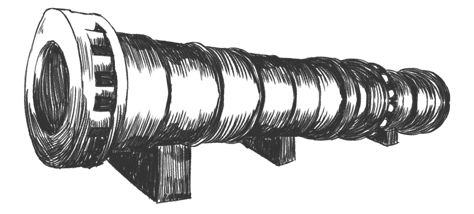 ArtifactHellfire cannonThe great magical cannons of the Empire as they appear in the Sürgün Günlükleri and Mürekkep ve Çelik campaigns, where the palace's chief engineer claims their design and a new cannon, Gloria, is unveiled outside Gromkar.PlaceAkşelaleAn unwalled city of strong elven character in the Mürekkep ve Çelik campaign, named for the white waterfall on its slope and ruled by a council of eight lords, where the party investigated the legion's firing on a peaceful crowd.CharacterAlcarin NovaAn imperial Justicar of the Mürekkep ve Çelik campaign, famed for catching the killer called the Dark Knife, who is sent by the emperor to investigate the cannon fire on the townsfolk of Akşelale.CharacterAlexA student of writing, languages and history from White City at the Archon in the Mürekkep ve Çelik campaign, a long-standing member of the Golden Arrow who befriends Castor and brings him to a secret gathering of discontented mages.CharacterAypol MorksA diviner trained at the Archon Academy in the Mürekkep ve Çelik campaign, who travels as a street conjurer and guided Castor and Leonard to the bloodstone hidden beneath South Razel in return for a share for his alchemy.CharacterBoboA small former circus bear in the Mürekkep ve Çelik campaign, left to Castor and Glanfall by their comrade Roland, whose growth was halted by elven runes around its neck and who follows Glanfall everywhere.ArtifactCastor's estate contractA written agreement of the Mürekkep ve Çelik campaign by which Castor received two Starsong books and a pseudodragon egg from Esnarril Softart, in return for his personal belongings passing to the Starsong academy at his death.CharacterEsnarril SoftartA high elf master mage of the Mürekkep ve Çelik campaign who keeps the Starsong shop of rare books and magical goods in Akşelale, signs an estate agreement with Castor and helps to find the wounded Glamrin.