Frans
The Frans, usually called northerners in the Empire, are the people of Fraza, the harsh realm beyond the mountain passes to the north of The Empire. Northerners live in clans and embrace a free way of life.1
Land and ancestors
The Realm of Fraza is hard and unforgiving: its wilds teem with monsters and its climate makes survival a struggle. The land was once a hellish place full of dragons, giants and monsters, until, ages ago, the ancestors of the northerners tamed it through their courage, and their culture of monster hunting lives on.1
In the north, life and order differ greatly from the Empire. Struggle, hardship and the glory of overcoming them are part of everyday life, harsh wilderness fills the land between cities, and the northerners have always lived surrounded by monsters.2
Society
Fran society is strongly meritocratic, and success is won through strength.1 Skill always counts for more than blood, and the right to rule, like every other right, is earned through deeds.2
The Fran people are vassals of the emperor.3
Warriors and hunters
Northerners are famed across the Empire as skilled warriors, so much so that a mercenary is worth more simply for coming from the north.1 Fighting is second nature to northerners; in the town of Hargal, the tribe's shield maidens teach the art of the spear and shield.4
People of Fran blood who are struck by lycanthropy do not turn into mindless monsters. If they learn to master their powers they become some of the mightiest warriors in the realm, known as ulfhednar. These warriors are regarded as chosen by the gods, and the gift sometimes comes to the young as a reward.1 When the numbers of the Chain Wardens dwindled, Fran warriors who had gained wolf-like powers were among the monster hunters who filled the gap.5
The Frans and giant cultures of the Lands of Exile honour the prey: they hold its struggle and its inevitable fall sacred. After every hunt the hunter is expected to let a few drops of their own blood fall into the dead animal's mouth and wish it a smooth passage to the Halls of Rakash.6
Faith
The Fran people have a pantheon of their own.7 They do not deny that the gods exist, but they do not worship them in the usual sense: they expect rewards in return for the sacrifices they make and the services they render, and they serve in turn for the blessings they receive. The lofty ideals of the Empire's gods mean nothing to them. They turn instead to nature gods who guard them against the northern cold, the malice of monsters and a poor hunt, and these gods are not always imagined in human form. The Great Wolf Ulfa is the mightiest of them, the Enduring Bear Urga helps the people survive hard winters, and the Lady of Winter Skand is the blizzard made flesh.2
There is no place for priests in the land of Fran. The druids, being closest to nature, carry the greatest divine message, and the most distinguished of them belong to the Circle of Fraza.2 Fortune-tellers and witches are held in high esteem in the Lands of Fraza.1
According to Fran belief, the afterlife has nothing to do with sins or virtues. Warriors who meet death with courage, prove their worth in life and choose rightly are rewarded with eternal life, while others return to Teneris as monsters or animals. Some people are believed to be born able to see the future, but a seer loses the gift on having a child.1
The Hymn of Bravery, said to be translated from the Frann tongue, tells of a champion with the heart of a bear and of the mighty spirits who watch over him; it is found in the book Hymns and Tales of Frann.6
Calendar and festivals
Northerners use the Wheel Calendar, a cyclical count built on the succession of the seasons and the days that mark the passage from one to the next, so that a day is named, for instance, as the thirty-fifth day of summer. The shamanic beliefs of the Fran people sit in harmony with it. Rather than say that ten years have passed since something happened, they say ten winters have passed, marking both the time gone by and the season of the event. The calendar is not efficient for exact reckoning and is kept for its cultural meaning; most northerners also know and use the Clora Fastis for more detailed accounts.8
The Night of the Red Moon was at first a Fran tradition, and it has spread to the northern provinces of the Empire that border Fraza. Fran belief also tells that a skilled seer once foretold how a thousand-fanged serpent and its brood would one day attack the world to avenge every creature that had been slain or tamed. On the Day of the Thousand Fangs people eat game, lock their doors and stay with their families while hunters patrol the streets; in the Empire the day may feel like a holiday, but in Fraza it is still taken seriously, and the monster hunters of the north stand truly ready to defend their homes.9
Food and drink
Fran fare known in the Empire includes Blackfang Ale, a bitter, frothy brew with a metallic tang that is said, falsely, to be strengthened with iron shavings; Stormleaf, a strong amber wine from storm-touched fruit, said to spark courage and, some claim, madness; Ironroot, a gritty, smoky wine mixed with roots from the deep forests, whose taste is called as hard as the Frans themselves; Gulshuk, a game steak grilled with volcanic peppers; and Frostpeak Dumplings filled with smoked venison and winter herbs. Giantbone, a dice game played with carved bones, comes from the north as well.10
History
In 212 AVD a warlord named Skolpa, chief of the White Stag clan, stirred the Fran people and gathered warriors from many clans under his banner. By every tradition he was a traitor, having rebelled against the Winterwolf clan and the Great Chief's agreement with the Empire, yet he revived the old fervour of the wolf pack, and that fervour spread through Fraza like a forest fire. His raids lasted four years and ended in a bloody battle on the border of the free ports, where Imperial forces crushed the northerners and took no prisoners.11
Since the raids, northerners have become a common sight in the Western Provinces.4 The descendants of many who never went home still live on the Free Coast. Many Jarls say that the agreement with the emperor has dulled the wolf's tooth, and though Skolpa was branded a traitor, he is also a hero in the north, where people raise their beers at the sound of his name.3
The orc tribes and the Fran people have been locked in a long and bloody conflict, kept alive by orc raids and Fran attacks until it has become all but impossible to resolve.12
Northerners abroad
Among the northerners found in the Empire's mercenary guilds are Gorthak Tuskcarver, born in the frozen wastes of Nornfall; Revna Spearmaiden, born in Hargal, who joined her tribe's shield maidens there; and Lachland, who came to the Western Provinces with his father, Karthul.13
Notes
- ↑BookLands of Exile: Starter Setting Guide, p. 43
- ↑BookShadow Over Vansreik, p. 27
- ↑BookMercenary Compendium, p. 123
- ↑BookMercenary Compendium, p. 122
- ↑BookShadow Over Vansreik, p. 35
- ↑BookBook of Dead, p. 103
- ↑BookLands of Exile: Starter Setting Guide, p. 25
- ↑BookLands of Exile: Starter Setting Guide, p. 5
- ↑BookLands of Exile: Starter Setting Guide, p. 6
- ↑BookLands of Exile: Starter Setting Guide, pp. 46, 47, 48
- ↑BookLands of Exile: Starter Setting Guide, p. 16
- ↑BookLands of Exile: Starter Setting Guide, p. 45
- ↑BookMercenary Compendium, pp. 66, 96, 122
Sources
This article draws on:
Related articles
 DeityRakashThe god of death, the Gatekeeper, Heartless One and Reaper of Souls, who meets every soul at the Gate, guards the veil between realms and lets nothing that has passed return.PeopleHumansThe people who lived in northern Caligran long before the Desolation, sheltered the long-lived races after the Exodus and remain the greatest power in the Lands of Exile, at the heart of which stands their Empire.
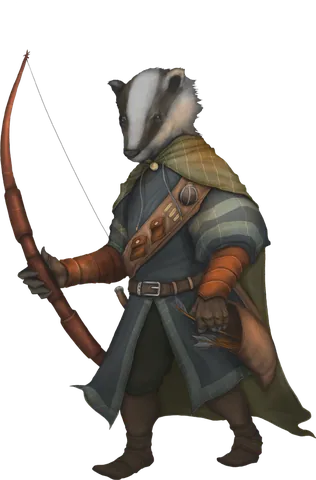 PeopleBadgerfolkA small, fur-covered people from the Blue Forest who resemble badgers standing on two legs. They are skilled craftsmen and archers, build wooden towns they can move with the seasons, elect their mayors, and often stand with the wood elves.
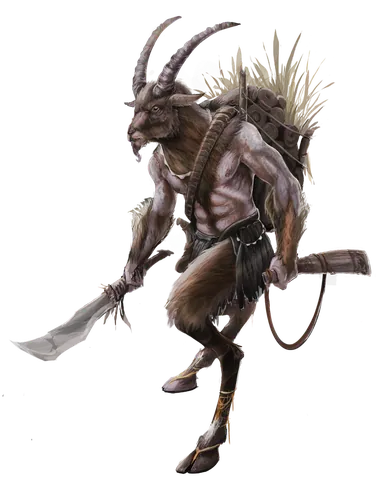 PeopleCapraA tireless, goat-headed nomadic people of the Yellow Sea beyond the forest frontier, led in herds by their strongest warrior, the Shepherd, and divided between herds bound to nature and herds touched by dark gods.
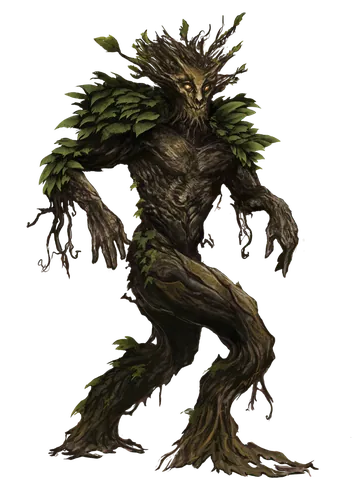 PeopleDroomA rare people born from the heart of an ancient forest, whose bodies of bark, leaves, vines and resin make them resemble walking, talking trees. They have no parents, do not age, and turn back into trees when they die of natural causes.
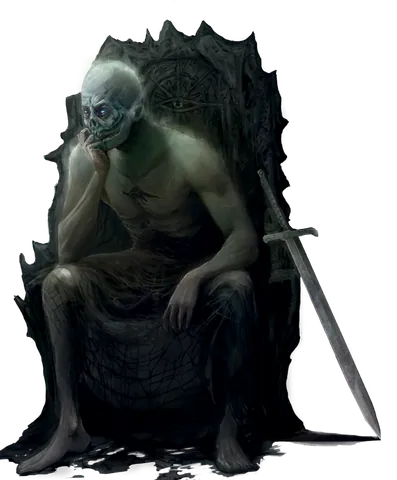 PeopleForgottenThe dead who walk with their souls and their memories intact. Unlike the mindless dead, a forgotten remembers everything, looks as they did in life but paler and cold, does not age, and must hold to a purpose or slowly lose their mind again.