
The Empire
The Empire stands at the heart of the Lands of Exile, in the north of Caligran. Humans lived in these lands long before the Desolation drove the other races north as refugees, and they remain the greatest power there.1
Its political life is a weave of feudal rule, religious fervour and the constant threat of dark forces. At its head stands the Emperor of the line of the Red Eagle, whose word is law, and beneath him five Sovereigns govern the provinces. For many of its people the Empire is a colossal idea that is hard to grasp, and their beliefs, imaginations and even dreams rarely cross its borders.2
Lands and borders
North of the Empire, beyond the mountain passes, lies the Land of Fraza. In the south the Calinor-dal River, carved into the land by magic, marks the border with the Da’fat Federation. In the north-east, ancient dwarf fortresses stand as strong keeps on the mountaintops, and the Boundless Forest separates the Empire from the eastern steppes.13
The Empire gives priority to road safety, especially along the trade routes, and paves as many roads between the great cities as it can, but anyone who leaves those few routes is in grave danger. The rule of the Red Eagle covers the roads and cities completely; claiming the ancient forests is another matter, even for the mightiest of men.14
On the western coast, the city of Neptune has defied the Empire's rule for decades and become a refuge for those who would escape its gaze.5
History
The extensive record-keeping of humans does not reach back before the Empire, and the history of the realm is generally told according to Imperial doctrine. Even within the Empire, factions, sects and groups readily tell their own versions.6
Founding
After the Desolation the surviving gods withdrew to the heavens and left the Priest-Kings as absolute rulers. By the Empire's own account, the five Priest-Kings later shared a dream of a red eagle, and in the years that followed they gave up their crowns to a warlord called the "Red Eagle", who had defended humanity against rising threats. This was Rolus; his noble surname was struck from history and he became the unquestioned emperor. His generals were set over the four great cities beyond Marble City, founding noble houses with powers befitting kings, since there was no other way to govern such vast lands. Elven sources tell it differently: the crowns passed not in peace but under the weight of Rolus's legions.7
The Third Age
The fear of magic that still lingers across the land dates from the War of the Immortal Mages, when wizards who had made themselves immortal fought among themselves until the High Church and the Imperial nobility backed the repentant side and ended the war. Afterwards Emperor Valigard IV declared the edict known as The Sanction, in 1203 BVD. In time the noble houses slowly regained power while the Emperor's central authority weakened.8
When the Heralds, powerful beings who commanded the voidborn, rose, their forces met the armies of the Alliance outside Marble City. The battle is remembered as Victory Day, which immortalised Emperor Vaden I and the Alliance commander Marus Salinor among others. Immediately afterwards miracles and divine magic faded from the realm. For a time it seemed that the gods who had protected the Empire had either perished or were too exhausted to reach out to Teneris, though the silence did not last long.9
After Victory Day
In 24 AVD a terrible civil war shook the Empire to its core. Vaden I was found murdered in his bed, and his son Vaden II took the throne swearing revenge, outlawed the Order of Chain and sent the legions against its strongholds; even those who fled abroad were hunted down. Loyalists faced sceptics led by Marus Salinor, though in Imperial tradition replacing the Emperor with someone of another lineage was unthinkable. The war ended with a raid on the Marble Palace, and Vaden II was dethroned; Elatan I took the throne in 27 AVD. The events are told in Rise and Fall of the Usurper.10
In 151 AVD Emperor Conrad II, later called the Conqueror, led his legions into the Underdark, struck the drow cities nearest the surface and built permanent outposts on the tunnels and roads leading to them (The Underdark Campaign). After the wizard Gelts made a failed attempt on his life in the Marble Palace in 158 AVD, some estranged nobles rose in rebellion. The rebellion was crushed, but Conrad II was then killed near the Dwarf Gate, the first emperor to fall in battle.11
In 212 AVD the Fran warlord Skolpa turned his raids on Imperial lands, cut the Empire off from the Archon Academy and the Farr Islands, and destroyed temples wherever he went, until the High Church demanded retribution. Imperial forces crushed the northerners and took no prisoners, and Skolpa's body was torn into five parts and sent to the five provinces as a warning (The Skolpa Scourge).12
In 285 AVD, with the support of Emperor Falkred I, the ship Imperius sailed west and returned four years later with news of the continent of Canarque, which most of the Empire calls the New World (Discovery of the New World).13
Government
The Emperor
At the pinnacle of authority stands the Emperor, who holds secular and divine power at once as the earthly representative of Alarath. The throne passes by inheritance, and the line of the Red Eagle has never been broken. Only the Emperor's authority is absolute and his word is law; the Empire can be called an absolute monarchy heavily influenced by faith, and it prides itself on being just but stern.14
Should the Emperor ever die without an heir, only the Sovereigns may vote for a new one, and the Supreme Patriarch of the High Church holds one further vote so that their votes cannot tie. It has never happened.16
The Senate in Marble City is a council of wealthy, powerful and influential advisers appointed by the Emperor himself. It has no real authority.17
Sovereigns and nobility
Beneath the Emperor, the Sovereigns govern the provinces as regional leaders with wide autonomy, while acknowledging their allegiance to the throne. This patchwork of principalities is both the Empire's strength and its weakness: the Sovereigns' loyalty is essential to stability, and ambitious leaders often clash as they vie for Imperial influence. Constant power struggles, and even open conflict, are part of Imperial political life.14
Within each province the noble houses follow a clear hierarchy. Lords manage their own lands and answer to barons; barons, strong enough to govern great cities, answer to a count; and the counts are the highest rank in a province after the Sovereign. Some ancient and powerful families hold the rare title of duke, above a count. Knights also count as nobility, with small lands, a castle or no land at all, and are generally the lowest rank.17
Rank passes by blood, and noble marriages matter greatly, since a strong lineage strengthens claims to lands and titles. In the rare case that a noble marries a commoner, the spouse becomes noble and takes the matching titles, but is likely to be reminded of those lowborn origins for life. No law forbids women to rule, yet in a world run by old and powerful men it is much harder for a woman to prove herself.17
Each province also has a viceroy and a military governor, called the shadows of the Emperor. They do not own land as the nobles do, but they collect taxes for the capital and recruit soldiers, and disputed cities are sometimes placed directly under a governor instead of a noble.15
Law and order
The Empire is advanced in bureaucracy and law compared with its neighbours, and it is watchful over criminal records and road safety. Yet each province works like a kingdom of its own, so a criminal who moves on can often live under a false name. Those who go too far attract the Justicars, lawmen with powers as wide as a high judge's, great resources and the freedom to act in any province.18
By tradition every city must keep the roads safe for about forty miles around it, and its ruling houses answer for this. Roadwardens, Imperial officials who protect caravans and fight highwaymen, serve under the local counts and are paid by their results.1920
Mercenary work is legal only under a written contract, which can be issued by privileged mercenary guilds, licensed freelancers and officials empowered by the Empire. A contract for a task that Imperial law forbids is void.2122
The Imperial Intelligence holds a crucial place in the Empire's balance of power, with agents waiting in enemy lands, allied cities and the Empire itself. The agents of the Grey Owl, the Empire's secret service, are feared by every high-ranking member of the Empire, the Inquisition included.23
Society
The idea of equality before the law is thought a ludicrous joke. Laws protect citizens, but citizenship belongs only to those born in the great provincial capitals such as Marble City, and peasants and slaves are at the mercy of their rulers. However wealthy, the lowborn have limited rights.15
Clergy, officials and soldiers are always valued, and the highest of them are always influential in politics, the more so if they come of noble families. The Empire values merit but never ignores lineage: it is very hard to rise on favour alone, but among the successful a powerful surname helps. Positions and titles always come before individuals.24
Imperial law forbids slavery, but only for Imperial citizens, a small part of those who live under the Imperial banner. Selling humans as slaves is unheard of by unwritten rule, but the same is not true of other races; since allied races enjoy some diplomatic protection, slavery falls most heavily on the drow, and a drow without a document proving freedom is fair game for bounty hunters.25
The Empire is not a place where people may freely speak their minds or pursue research as they wish, and for that reason literacy is rare outside the great cities. Most people cannot read, and keep time by notions like "mid-morning" or by the bells of a temple. Mechanical clocks are a costly gnomish art that only the rich can afford, and there are just two clock towers in the Empire, in Marble City and in Westreach.26
The folk of the Empire look on adventurers with a mixture of admiration and envy. They believe adventurers are useful in battles they cannot fight themselves, but successful adventurers gather wealth and status at an alarming rate, and those born to wealth and status seldom want to share power with commoners, heroes or not.1
Death is met with fear and suspicion throughout the Empire. Those whose work turns on death, from executioners and grave diggers to the respected priests of Rakash, are often pushed to the margins.27
Harvest festivals in autumn and spring are common across the Empire, and some governors and nobles spend part of their wealth on celebrations believed to raise patriotic spirit. The story of Saint Clarice, a tale of defiance, duty and courage, fits Imperial propaganda perfectly.28
Hunting rights are bound up with the feudal order. Nobles keep royal forests and hunting grounds, hunting is a privilege granted by licence, gamekeepers enforce the forest laws, and poaching is punished severely.29
Languages
Most people speak Empirian, the daily tongue. Scholars, officials and nobles read and write Lingua Imperium, the old tongue of the Empire, a privilege the highborn tend to keep for themselves. Elvish is widely learned among the elite, and intellectuals like to boast of knowing Gnomish.30
Peoples of the Empire
Dwarves are the Empire's closest allies and among its most respected peoples; some clans have moved into Imperial cities outright, and their mark is strongest in Nearpeak. Elves are treated as allies. Most other races find it hard to rise.31
- Gnomes often hold bureaucratic posts, prized for their gift for languages and their memory. Most of the Empire's gnomes live in Marble City, where they teach in its academies and face little discrimination.3233
- Dragonborn are respected and feared, as dragons are. The elite warriors of the Throneguard clan have served as close protectors of emperors and the royal family.3234
- Halflings live in villages of their own in parts of the Empire, such as Bellwater Village near Vansreik.32
- Orcs are generally seen as enemies and raiders, and are met with deep prejudice. They are rare in the western provinces and common in the eastern forests.35
- Northerners are renowned across the Empire as warriors; the Frans are vassals of the Emperor.3637
- Farr Islanders are not uncommon near the sea, and the people of the Iron Isles pay taxes to the Empire despite the distance. The Free Folk of the west may all be outlaws in the Empire's eyes, though the reality is different.38
Conflicts between the Empire and the Wood Elves who broke away from the Da’fat Federation have gone on for ages. The wood elves' war clans, the K're, guard the ancient forests against the Empire, which regards them as little better than terrorists and sets bounties on their members. The Badgerfolk usually side with the elves in these conflicts.3940
Economy
Goods are produced in every corner of the Empire and traded between provinces by large caravans and, where possible, river boats. The further a product travels the dearer it becomes, and goods from beyond the borders are the dearest of all. The throne does little to interfere with the market: prices are set by merchants and trade guilds through competition, supply and demand.15
Peasants mostly barter and pay their taxes in grain, milk and cheese, while merchants, city folk and adventurers deal in coin, and nobles can trade in legal rights such as mining rights, ports, tax privileges or farmland. Imperial folk call their coins eagles or aquilas.15
The Imperial Bank has a branch in every major city. It keeps accounts and vaults, lends at interest, and lets its customers draw their wealth in another city after a few days' correspondence, sparing them the dangers of the road; a bank clerk's post is a prestigious one.41
The Empire holds that the right to bargain, road safety and the security of property must always be protected, as long as everyone pays their taxes. Behind the scenes, merchant and artisan guilds in its cities often settle their rivalries with blackmail and even murder. Pirates are the unofficial go-betweens in trade with the Farr nations, bringing exotic goods such as chocolate.4243
Military
The Empire is a military culture. Through the ages, the shadows that fell on the Lands of Exile were driven back chiefly by its swords, and those wars of survival hardened its stern character.41
Every baby born in the Empire salutes first, cries later.44
The Legion
The Legion is the Empire's war machine, the most elite, trained and disciplined soldiers in the realm. It answers to no noble family, institution or agenda, only to the Emperor. There are eleven legions, each of eight thousand to eighty thousand people. Their pay and equipment come from the Marble Palace, but the province where a legion is stationed must feed it, and when a legion falls or is disbanded its number dies with it.41
A legion is led by a legatus, with tribunes, praefecti, centurions and optios beneath; many scholars of war call the centurions its backbone. Soldiers can rise to centurion by merit, but higher ranks require graduation from the Imperial School of War. The gladius is the short sword of the legions and the infantry.4546
Other forces
Each province keeps a small standing army under its Sovereign, in the colours of the Sovereign's house; it fights beside the nobility in war and guards roads, cities and outposts in peace. Some noble houses also keep armies, especially those with vast lands, border holdings or a proud military history, while others hire mercenaries. As bannermen they must provide troops to their seniors, to the Elector Counts of their province and to the Emperor himself.4447
Imperial tradition expects every man to handle a spear and shoot a bow, and the priests of Alarath encourage the young in this. When the war horns sound, a large if lightly trained militia can be raised, and remote villages rely on such militias for their safety.44
The Empire has a strong taste for gunpowder weapons, now made jointly by Imperial engineers and Archon wizards. In the last decade Imperial engineers, Archon wizards and gnome craftsmen built two hellfire cannons, named Gloria and Invictor, as a warning to any noble house that might think of rebellion.4849
The largest mercenary company within its borders, The Scarlet Spears, was formed about a century ago as a proxy tool to unify the eastern side of the Empire. It is organised like the legions, most of its members are former legionaries, and it fights by the Empire's rules.50
Religion
The essence of Alarath runs through every bone of the Empire, and soldiers revere him above all. The idea of the "ideal citizen" holds that one must stand on the right side of the eternal conflict, as subject and ally of the Twin Gods and the other Greater Gods, for only by following the divine light without hesitation can The Dark One be held at bay. Even so, beliefs and rituals vary from province to province.51
The High Church is among the most important institutions in the Empire, unmatched in its influence on the people, its wealth and its political power, and many scholars count it among the pillars that keep the Empire standing. Its Supreme Patriarch is the religious leader of the whole Empire, and its First Cathedral stands in Sanctuary, near Marble City. Most churches belong to Alarath and Amarath. Provincial capitals have vast cathedrals and remote villages small churches, and no one may openly speak against a god.5253
In the great cities, orphans, chiefly the children of the Emperor's fallen servants, are raised in church orphanages, and many go on to the priesthood. The Empire has knightly orders both secular and religious, from local brotherhoods to famous religious organisations.54
The Holy Inquisition keeps its own outposts throughout the Empire, where fanatics hunt illegal sorcerers, cultists and cursed creatures. Beliefs the Empire judges heretical have been put down harshly: it once hunted the Order of Nus’ar, and its dogma holds that Arcaneus was only a god whom Alarath set to guard the flow of time, so the belief that Arcaneus is a form of Orphus has been violently suppressed by the Empire and the Church.5556
Magic
Arcane casters are rare in the Empire, and all folk fear the arcane; magic is said to be feared even more than goblins. The Empire regulates magic strictly. Those born with arcane power are sought out as a great resource: left uncontrolled they are held to be a danger to society, but trained and under control they are the finest weapons in the Imperial arsenal.5758
Mages who wish to work independently after their training must pay a magical tax to the Empire. Bardic magic is thought far less harmful than a wizard's, and bards who keep the law and earn the silver pins of the colleges are seldom troubled.5960
Provinces
The Empire is divided into five provinces, each governed by a noble of Sovereign rank and named after its largest city. Each may have its own laws and traditions, and in each, letters are carried by a particular kind of bird, yet above them all stand the authority of the Red Eagle and the Imperial doctrine. Their Sovereigns are as follows.61
| Province | Sovereign |
|---|---|
| The Marble Seat | The crown prince, or an appointed steward |
| Westreach | House Von Laidorf |
| Bluelands | House Boldric |
| Whitefall | House Welsh |
| Nearpeak | House Grett |
Marble City, the capital, cannot feed itself and fills its markets with goods from every corner of the realm, which makes it the most expensive place to live in the Empire. Westreach is among the wealthiest cities and the second most populous, and the Empire long ago built its foundries and great workshops there. In Bluelands and Whitefall cultures mix more freely and magic is less feared than elsewhere, and the finest horses of the Empire are bred there.62
Institutions
Besides the High Church, the Legion and the Inquisition, the Empire's major institutions include:
- the Archon Academy, the academy of wizards that the scholar Xeratos helped to found;63
- the Order of Chain, granted two fortresses, vast resources and legal immunity by the Empire;63
- the Order of Palanthor, the prestigious secular knights who guarantee the agreements made with the refugees after the Desolation, an order older than the Empire itself;64
- the Coalition of Enlightenment, a leaderless community of scientists who pay for their goals by, among other things, designing siege weapons for the Empire;65
- Fasbarn College, the most prestigious of the Empire's many art schools.65
Notes
- ↑BookLands of Exile: Starter Setting Guide, p. 2
- ↑BookLands of Exile: Starter Setting Guide, pp. 3, 33, 34
- ↑BookShadow Over Vansreik, p. 46
- ↑BookShadow Over Vansreik, p. 19
- ↑BookMercenary Compendium, p. 82
- ↑BookLands of Exile: Starter Setting Guide, pp. 3, 10
- ↑BookLands of Exile: Starter Setting Guide, pp. 10, 11
- ↑BookLands of Exile: Starter Setting Guide, pp. 12, 13
- ↑BookLands of Exile: Starter Setting Guide, pp. 13, 14
- ↑BookLands of Exile: Starter Setting Guide, pp. 14, 15
- ↑BookLands of Exile: Starter Setting Guide, pp. 15, 16
- ↑BookLands of Exile: Starter Setting Guide, p. 16
- ↑BookLands of Exile: Starter Setting Guide, p. 17
- ↑BookLands of Exile: Starter Setting Guide, pp. 33, 34
- ↑BookLands of Exile: Starter Setting Guide, p. 34
- ↑BookLands of Exile: Starter Setting Guide, pp. 11, 33
- ↑BookLands of Exile: Starter Setting Guide, p. 33
- ↑BookMercenary Compendium, pp. 14, 93
- ↑BookShadow Over Vansreik, p. 231
- ↑BookBook of Dead, pp. 42, 64
- ↑BookMercenary Compendium, p. 14
- ↑BookShadow Over Vansreik, p. 53
- ↑BookShadow Over Vansreik, pp. 37, 52
- ↑BookLands of Exile: Starter Setting Guide, pp. 34, 39
- ↑BookLands of Exile: Starter Setting Guide, p. 15
- ↑BookLands of Exile: Starter Setting Guide, pp. 7, 10
- ↑BookBook of Dead, p. 27
- ↑BookLands of Exile: Starter Setting Guide, pp. 6, 7
- ↑BookMercenary Compendium, p. 152
- ↑BookLands of Exile: Starter Setting Guide, pp. 33, 43, 44
- ↑BookLands of Exile: Starter Setting Guide, pp. 34, 39, 42
- ↑BookLands of Exile: Starter Setting Guide, p. 44
- ↑BookMercenary Compendium, p. 115
- ↑BookMercenary Compendium, p. 155
- ↑BookLands of Exile: Starter Setting Guide, p. 45
- ↑BookLands of Exile: Starter Setting Guide, p. 43
- ↑BookMercenary Compendium, p. 123
- ↑BookLands of Exile: Starter Setting Guide, pp. 43, 44, 45
- ↑BookMercenary Compendium, p. 46
- ↑BookShadow Over Vansreik, pp. 19, 45
- ↑BookLands of Exile: Starter Setting Guide, p. 35
- ↑BookShadow Over Vansreik, p. 24
- ↑BookMercenary Compendium, pp. 107, 124
- ↑BookLands of Exile: Starter Setting Guide, p. 36
- ↑BookLands of Exile: Starter Setting Guide, pp. 35, 36
- ↑BookMercenary Compendium, p. 194
- ↑BookShadow Over Vansreik, p. 29
- ↑BookLands of Exile: Starter Setting Guide, p. 3
- ↑BookMercenary Compendium, p. 201
- ↑BookMercenary Compendium, p. 160
- ↑BookLands of Exile: Starter Setting Guide, pp. 21, 28
- ↑BookLands of Exile: Starter Setting Guide, pp. 23, 24, 40
- ↑BookMercenary Compendium, p. 98
- ↑BookLands of Exile: Starter Setting Guide, pp. 23, 24
- ↑BookLands of Exile: Starter Setting Guide, pp. 40, 41
- ↑BookBook of Dead, p. 35
- ↑BookShadow Over Vansreik, pp. 57, 58
- ↑BookMercenary Compendium, pp. 65, 100
- ↑BookLands of Exile: Starter Setting Guide, p. 12
- ↑BookMercenary Compendium, p. 65
- ↑BookLands of Exile: Starter Setting Guide, pp. 36, 37, 38, 39
- ↑BookLands of Exile: Starter Setting Guide, pp. 37, 38
- ↑BookLands of Exile: Starter Setting Guide, p. 11
- ↑BookLands of Exile: Starter Setting Guide, p. 41
- ↑BookLands of Exile: Starter Setting Guide, p. 40
Sources
This article draws on:
- SSGLands of Exile: Starter Setting Guide(Bad Badger Games, 2024), pp. 2, 3, 6, 7, 10-17, 21, 23, 24, 28, 33-45
- SoVShadow Over Vansreik(Bad Badger Games, 2024), pp. 19, 24, 29, 37, 45, 46, 52, 53, 57, 58, 231
- MCMercenary Compendium(Bad Badger Games, 2024), pp. 14, 46, 65, 82, 93, 98, 100, 107, 115, 123, 124, 152, 155, 160, 194, 201
- BoDBook of Dead(Bad Badger Games, 2024), pp. 27, 35, 42, 64
Images in this article
 Lands of Exile: Starter Setting Guide (Bad Badger Games, 2024), p. 36. Art by the Bad Badger Games team.

In The Empire
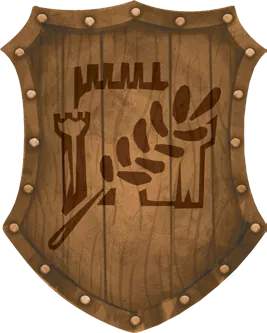 RegionBluelandsA large, densely populated imperial province of blue-leaved forests and fertile farmland along the Calinor-dal River, ruled by House Boldric and famous for its agriculture, timber and wine.
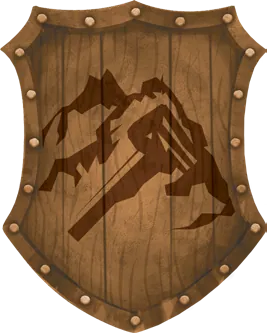 RegionNearpeakAn imperial province bordering the Fraza Lands and the great dwarf kingdoms, ruled by House Grett and marked by dwarven influence in its architecture and culture.
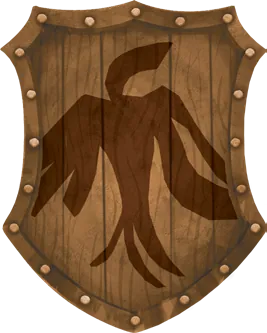 RegionThe Marble SeatThe capital province of the Empire, smallest in size but first in standing, traditionally governed by the heir to the throne.
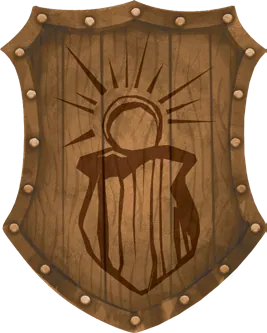 RegionWestreachAn imperial province of mines, foundries and printing presses, ruled by House Von Laidorf and known for its proud, protocol-bound nobility.
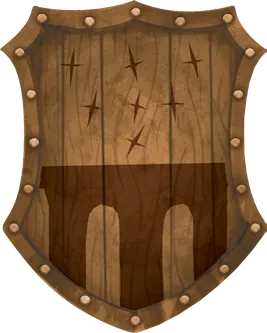 RegionWhitefallAn imperial province at the northern end of the Silver Bridge, where elven culture runs deep, humans and elves are bound by family ties, and the finest horses of the Empire are bred.ConceptDay of SwordsA celebration of courage and past victories, once much more widespread, that still hosts annual gladiator fights. People give gifts to legionaries and listen to the stories of old veterans.CharacterEmperor Conrad IIThe emperor who led the legions into the underdark in 151 AVD and earned the title Conqueror, the first emperor to fall in battle, still held to be the greatest emperor of recent ages after Vaden I.ConceptEmpirianThe daily language of the Empire, spoken by most of its people and also called Common.ConceptGunpowderA relatively new invention whose production in the Lands of Exile needs the joint work of Archon Academy wizards and imperial alchemists, and whose supply is ordered by the First Priority Act.ConceptHarvest FestivalThe celebrations held across the Empire for the spring and autumn harvests, when people give thanks to Amarath, share the harvest with the poor, welcome travellers and exchange gifts.ConceptLingua ImperiumThe old tongue of the Empire, also called High Common, in which scholars, officials and nobles read and write; knowing it is a privilege the highborn keep for themselves.
Related articles
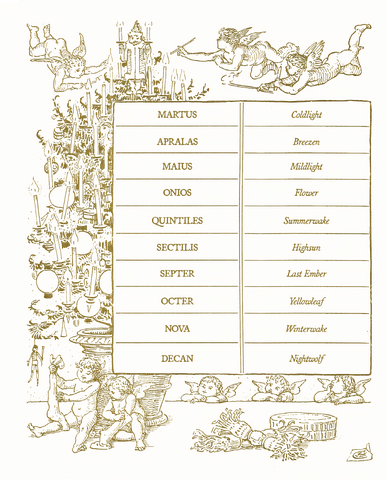 ConceptClora FastisThe formal calendar of the Empire, used by nearly everyone in Caligran, with ten months in a year of 304 days and years counted before and after Victory Day.RegionLands of ExileThe northern lands of Caligran where the ancient races took refuge after the Desolation, with the Empire at their heart, a harsh world of rare magic, scarce learning, many faiths and dangerous wilds.RegionCanarqueThe western of the two great continents of Teneris, a collection of fragmented lands discovered by an imperial expedition that returned in 289 AVD, and known to most imperial subjects as the New World.RegionDa’fat FederationThe elven federation south of the Calinor-dal, founded in the Second Age by elven tribes who fled north after the Desolation; every surviving elven people lives there, and Lady Nemarin is its spiritual leader.